
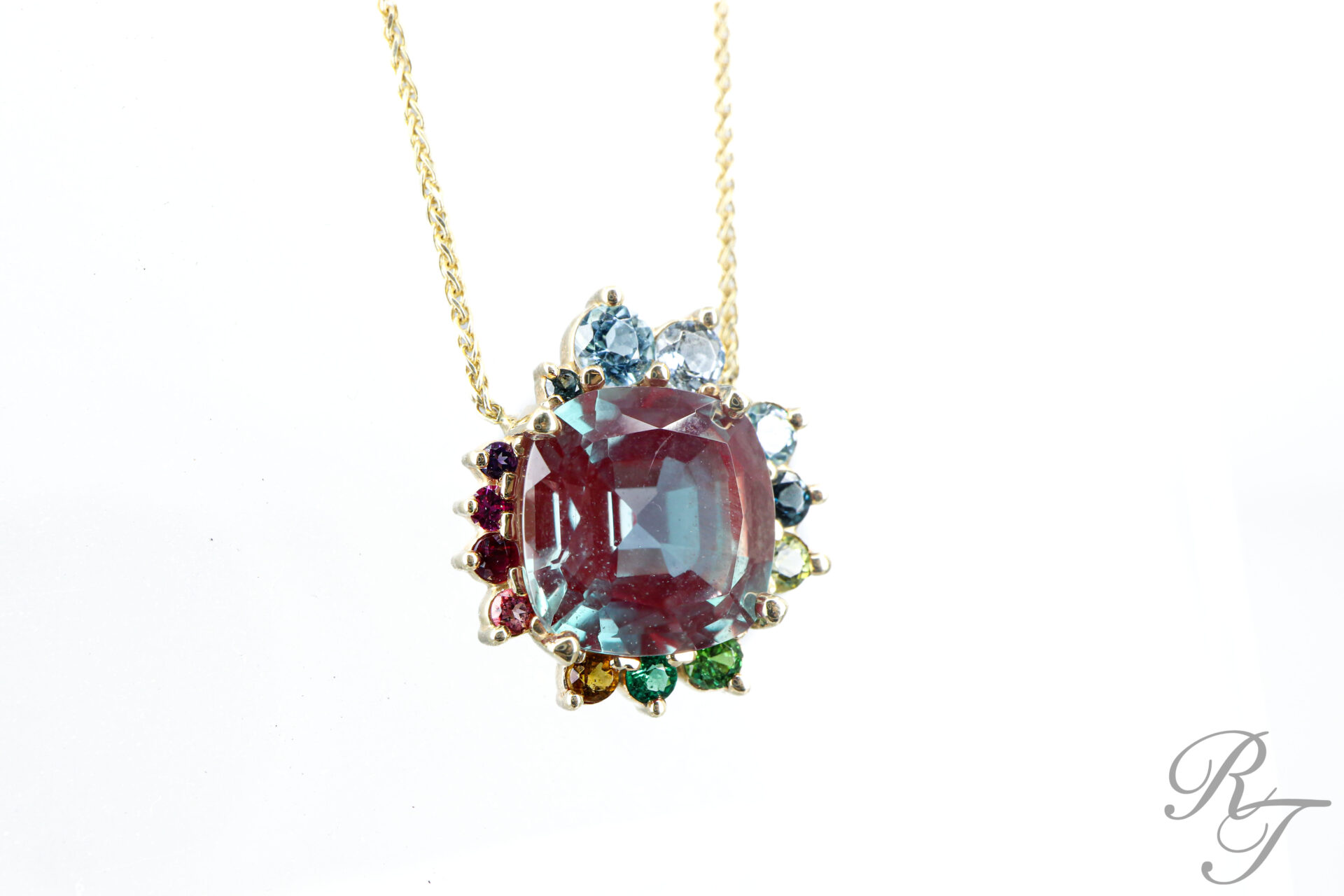
A stone falls out. Maybe you noticed the empty setting right away, or maybe you looked down an hour later and found the gap. Either way, a missing stone does not mean the piece is gone. Stone replacement is one of the most satisfying repairs in jewelry because the result is a piece that looks whole again, often with no visible trace that anything was ever wrong.
Rick Terry Jewelry Designs has handled stone replacement work in Knoxville since 1986. This article covers exactly what the process looks like: how stones are sourced and matched, how different setting types affect the repair, what replacement costs look like across different scenarios, and what questions to ask before leaving a piece with any jeweler. If you have a ring, necklace, earring, or bracelet with a missing or damaged stone, this is what restoration looks like from start to finish.
What Is Jewelry Stone Replacement and When Does a Piece Actually Need It?
Stone replacement means removing a damaged or missing gemstone from a piece of jewelry and securing a new one in its place. This becomes necessary in a few consistent situations: a stone falls out because prongs have worn down or been bent, a stone chips or cracks from impact, a stone has become too scratched or clouded for cleaning and polishing to restore its appearance, or a previous amateur repair used the wrong stone and the piece needs to be corrected.
The process is not simply swapping one stone for another. A professional replacement involves evaluating the setting for damage, sourcing a stone that matches the original in cut, size, color, and quality, and securing the new stone so it holds up to real wear. When done correctly by a trained bench jeweler, the result is a piece that performs and looks exactly as it was originally designed.
Diamond melee, the small accent stones in pave and channel settings, accounts for a significant share of all replacement work. These tiny stones chip and fall out far more often than center stones, and most people lose them without realizing it until the setting looks visibly empty.
How Are Replacement Stones Sourced and Matched to the Original?
Stone matching is among the most skilled parts of replacement work. The objective is a new stone the average person cannot distinguish from what was originally there. For diamonds, this means matching the four Cs: cut, color, clarity, and carat weight. For colored gemstones, it means matching hue, saturation, tone, and transparency, which involves more subjective judgment and sometimes more time.
Rick Terry Jewelry Designs carries stone inventory on-site, which means the matching process happens in the shop, in front of you, rather than through an outside order that arrives weeks later. The team pulls multiple candidates and compares them against the remaining stones in the piece under magnification and controlled lighting. This approach is faster and more accurate than working from a catalog description or a mailed stone.
All diamonds and gemstones at Rick Terry Jewelry Designs are locally and responsibly sourced. This is a deliberate choice the shop has maintained as part of its commitment to ethical sourcing, and it applies to replacement stones as much as it does to custom design work.
For common stones like round brilliant diamonds in standard sizes, a well-matched replacement is usually straightforward. For unusual cuts, older styles like rose cuts or old mine cuts, or colored stones with distinctive geographic character, the search takes longer. An experienced jeweler is honest about that timeline upfront rather than promising speed that is not realistic.
Does the Setting Type Change How the Replacement Works?
Every setting type has its own repair logic, and understanding the differences matters when you are evaluating a quote or a timeline.
A prong setting holds a stone with small metal claws. Replacing a stone here means checking the prongs for wear, cleaning the seat, placing the new stone, and re-closing the prongs. If the prongs are worn down, they need to be re-tipped or rebuilt before the stone is set, which adds a step. Rick Terry Jewelry Designs includes prong and tip adjustment as part of its standard repair services, so the full structural picture gets addressed in one visit.
A bezel setting surrounds the stone with a continuous metal wall. Replacing a stone in a bezel requires opening the bezel, removing the old stone, placing the new one, and pressing the metal back over the stone’s girdle. The metalwork is more involved than a prong replacement, but the result is a setting that offers strong protection for the new stone.
Channel settings hold stones between two parallel metal rails, common in wedding bands and anniversary rings. Replacing a single channel-set stone means carefully separating the channel enough to access the damaged stone, placing the replacement, and resecuring the rails without disturbing adjacent stones. This is precision work that requires a trained hand.
Pave settings use tiny beads of metal to hold closely spaced small stones. Individual pave stones can be replaced without disturbing their neighbors, but the work demands experience and patience. A master jeweler, which is the level of expertise Rick Terry Jewelry Designs operates at, handles this kind of setting work routinely.
Which Gemstones Can Be Replaced, and Are Some Harder to Source Than Others?
Diamonds are the most commonly replaced stone and the most straightforward to source in standard sizes and cuts. The supply chain for diamonds is well-established, and a shop with on-site inventory, like Rick Terry Jewelry Designs, can match most standard specifications without a delay.
Sapphires, rubies, and emeralds are widely available but require more careful color matching. Two sapphires of the same grade can look visibly different side by side because of how color interacts with a specific cut. In-person matching, with the piece and candidate stones in hand simultaneously, is almost always preferable to ordering based on grade alone.
Semi-precious stones like tanzanite, tourmaline, aquamarine, and morganite have more natural variation within their color categories, which can make matching challenging. Some are also more fragile than diamonds or corundum, which affects how the replacement stone is set and what setting styles are appropriate for long-term wear.
Organic gems like pearls, coral, and amber follow entirely different repair logic. Pearl strands are restrung rather than re-set, and individual pearl settings have their own protocols. Rick Terry Jewelry Designs handles the full range of gemstone repair work, including these specialty categories, as part of its comprehensive repair and refurbishing services.
What Does Stone Replacement Cost in Knoxville?
Three factors drive cost: the stone being replaced, the complexity of the setting work, and whether additional repairs are needed before the new stone can be secured.
A small round diamond melee replacement, the kind used in pave or channel side stones, generally runs between $30 and $150 per stone depending on size and quality. Center diamond replacements have a much wider range because the stone itself accounts for most of the cost. A high-quality one-carat replacement diamond can range from $3,000 to well above $10,000 depending on cut, color, and clarity.
Colored stone replacements vary similarly. A small synthetic sapphire in a standard size might cost $50 to $150 including setting labor. A natural, untreated sapphire with strong color saturation is priced very differently. At Rick Terry Jewelry Designs, the team explains the difference between natural, lab-created, and treated versions of any stone you need, and presents options across price points so you can make an informed decision.
Labor for setting work on a straightforward replacement typically runs $50 to $150. Complex settings, prong rebuilding, or bezel work that requires reshaping adds to that figure. A written estimate before any work begins is standard practice at Rick Terry Jewelry Designs, and it is the clearest protection against surprises at pickup.
What Should You Ask Before Leaving Your Jewelry for Stone Replacement?
First, ask whether the work is done in-house or sent to an outside facility. In-house work means faster turnaround and direct accountability. When a piece leaves the shop to travel to a third-party repair center, the timeline extends and your point of contact becomes an intermediary rather than the person actually doing the work. Rick Terry Jewelry Designs handles all stone replacement on-site.
Ask specifically about stone sourcing. If the shop is ordering a stone, ask how long that takes and whether you will have the chance to approve the stone before it is permanently set. You should always see the replacement stone before it becomes part of the piece. At Rick Terry Jewelry Designs, the matching process happens in front of clients using on-site inventory, which eliminates that waiting period in most cases.
Ask about the condition of the setting. If prongs are worn or the metal has any structural damage, those issues need to be addressed before or during the replacement. A new stone in a damaged setting is not a complete repair. It is a partial one waiting to fail again.
Ask for written documentation. A receipt listing the repair scope, stone specifications, and cost gives you a clear record and matters for insurance purposes. If you carry jewelry insurance, a stone replacement that changes the replacement value of the piece should be reported to your insurer. Rick Terry Jewelry Designs provides certified appraisals through its in-house gemologists, which means you can update your documentation in the same visit.
