
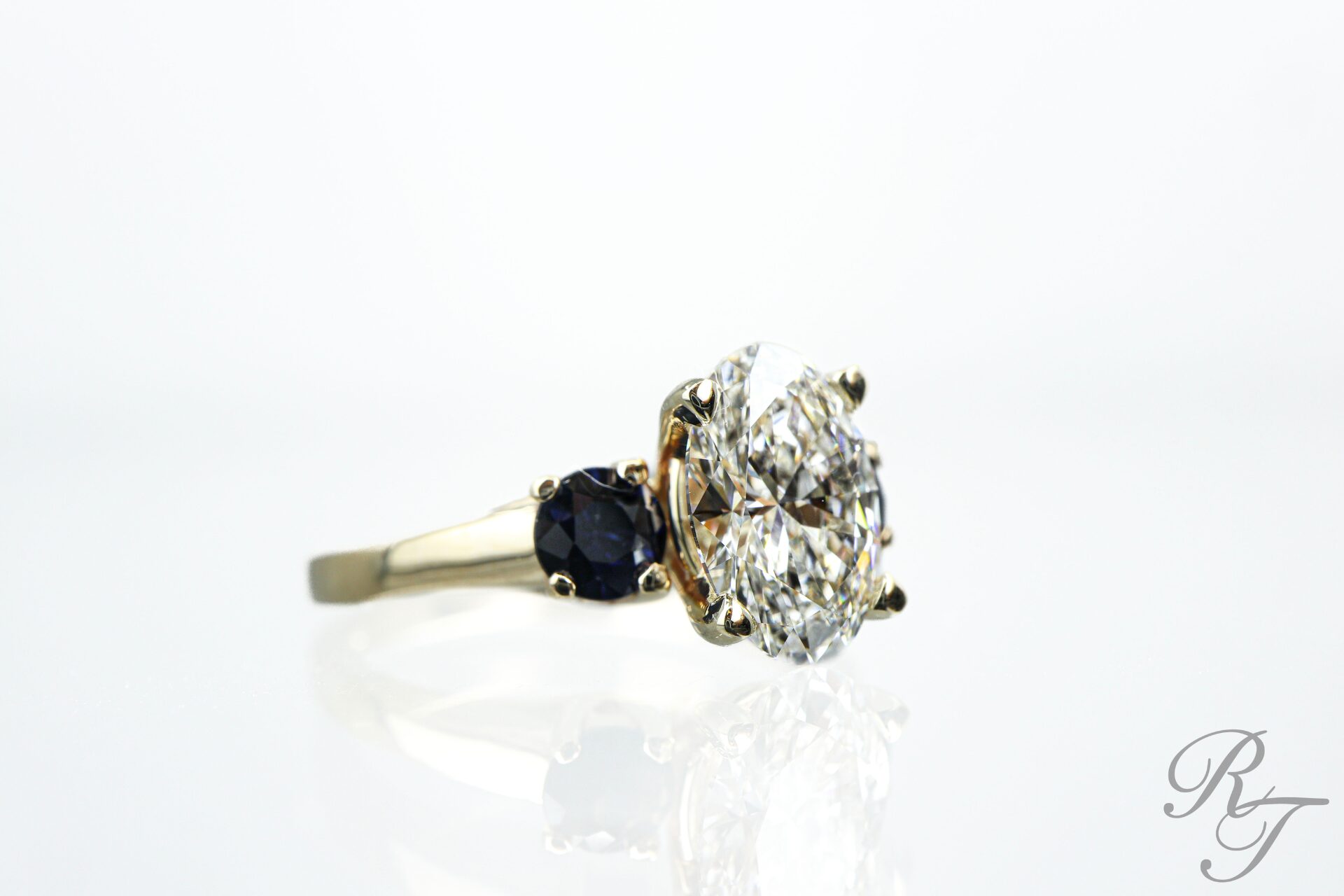
Most people never think about the prongs on their ring until something goes wrong. The diamond is right there, sparkling the way it always has, and the little metal claws holding it in place fade into the background. Then one day, a prong catches on a sweater, or worse, the stone shifts slightly when you tap it. That moment of panic is preventable. Prong wear is gradual, predictable, and fixable, as long as you catch it before the stone is gone.
Prongs are the small metal tips that grip a gemstone and hold it securely in its setting. On most engagement rings, there are four or six of them cradling the center stone. They are thin by design, which gives the diamond maximum exposure to light. That thinness also makes them the most vulnerable part of the ring. Everyday activities, from washing dishes to typing to gripping a gym bar, put constant low-level stress on those metal tips. Over years of wear, they flatten, thin, and eventually wear through.
The good news is that prong wear gives plenty of warning signs before a stone is ever at risk of falling out. Knowing what to look for saves you from a repair bill that turns into a replacement bill.

What Do Prongs Actually Do?
A prong does one job: it keeps your stone in the setting. Each prong bends slightly over the girdle of the diamond, creating a mechanical grip that holds the stone in place under normal conditions. The tension across all the prongs working together is what makes that grip reliable.
When one prong weakens, the load shifts to the remaining ones. A ring with four prongs becomes functionally a three-prong ring, then a two-prong ring. A six-prong setting has more redundancy built in, but the same deterioration process applies. Once enough prongs are compromised, the stone can move, loosen, and eventually fall out entirely, often without the wearer noticing until they look down and see an empty setting.
According to jewelry industry data, loose or worn prongs are among the most common causes of diamond loss in engagement rings. The repair itself is straightforward and affordable. Replacing a lost diamond is neither.

What Are the Signs That Your Prongs Need Attention?
The earliest sign is snagging. A prong that has begun to lift, flatten, or develop a rough edge will catch on fabric, hair, and skin in a way a healthy prong does not. If your ring is suddenly pulling threads from sweaters or catching on your hair, that is not a minor annoyance. That is a prong asking for help.
The next sign is visible wear on the prong tips. Look at your ring under good lighting, ideally with a magnifying glass or the zoom function on your phone camera. Healthy prongs are rounded and smooth, curving gently over the stone. Worn prongs look flat, pointed, or noticeably shorter than the others. If one prong looks different from the rest, it has lost material and needs attention.
A third sign is a stone that moves. Hold the ring steady and use a fingernail to apply very light lateral pressure to the center diamond. The stone should not shift at all. Any movement, even the slightest rotation or rock, means the prongs are no longer doing their job. At that point the ring needs to come off and go to a jeweler before the stone is worn any further.
Discoloration or dark spots at the base of a prong can also indicate wear. Metal that has thinned significantly sometimes shows stress differently than surrounding metal, especially in yellow gold settings.
Which Daily Activities Wear Prongs Down the Fastest?
Rings that stay on through every activity wear prongs faster than rings that come off during certain tasks. Gardening, weightlifting, rock climbing, and any work involving gripping tools or rough surfaces are particularly hard on prong tips. The repeated contact between metal and hard or abrasive materials removes small amounts of material each time.
Cleaning with chemicals also plays a role, though in a different way. Bleach, chlorine, and certain household cleaners can weaken gold alloys over time. The metal does not dissolve visibly, but its structural integrity changes. Prongs in a ring regularly exposed to pool water or cleaning products may fail sooner than the physical wear alone would suggest.
Sleeping in a ring is another underappreciated factor. The way hands press against pillows, sheets, and mattresses during sleep puts repeated pressure on prongs from angles that daytime wear does not. Many jewelers recommend removing rings before bed, and this is one of the main reasons why.
How Often Should You Have Prongs Professionally Inspected?

A professional inspection once a year is the standard recommendation for any ring worn daily. A trained jeweler checks prong height, tip condition, and stone security in a matter of minutes. The inspection itself is usually complimentary at a jeweler you have a relationship with.
Rings that go through heavy daily use benefit from a check every six months. This is especially true for rings worn during manual labor, exercise, or frequent exposure to water and chemicals.
Rick Terry Jewelry Designs offers a Maintenance Plan that includes regular professional inspections and cleanings, along with ongoing care for the life of the piece. For couples who wear their rings daily and want ongoing peace of mind, that kind of structured care prevents small issues from becoming expensive ones.
What Happens During a Prong Repair?
There are two types of prong repair: retipping and prong replacement. Retipping adds new metal to an existing prong that has worn thin. The jeweler uses a small amount of solder or laser-deposited metal to rebuild the tip, then reshapes and polishes it to match the original. Retipping is the right solution when the base of the prong is still structurally sound.
Prong replacement, sometimes called head replacement, involves removing the entire setting head and replacing it with a new one. This approach makes sense when multiple prongs are severely worn, when the prong base has cracked, or when the original setting design is no longer structurally viable. Head replacement takes more labor but leaves the ring with a completely fresh prong structure.
Both repairs are done in-house at Rick Terry Jewelry Designs in Knoxville. No shipping to a third-party repair facility, no unknown hands touching the ring. The same team that handles custom design handles repair, which means the standards are consistent throughout.
Can You Do a Prong Check at Home?
A basic at-home check takes about two minutes and costs nothing. Start by looking at the ring closely under a bright light. Use your phone camera on maximum zoom if you do not have a loupe. Check each prong for visible flattening, shortening, or rough edges. Compare each prong to the others. They should all look roughly the same height and shape.
Then test the stone. Hold the shank of the ring firmly and press gently on the diamond from the side with a fingernail. No movement should occur. Try this from multiple angles. If anything shifts, the ring should not be worn until a jeweler has assessed it.
Finally, drag the ring lightly across a piece of fabric, like a cotton t-shirt. A healthy setting moves smoothly. A setting with a lifted or rough prong catches almost immediately. This simple test catches issues that even a close visual inspection can miss.
At-home checks are a useful habit, but they do not replace professional evaluation. A jeweler uses magnification and experience to spot wear that is not yet visible to the untrained eye.
How Much Does Prong Repair Cost?
Prong retipping is one of the most affordable repairs a jeweler offers, whether you need a single prong addressed or all four to six retipped. Full head replacement involves more labor but is still a fraction of what most people expect. Either way, the cost of repair looks very different next to the cost of replacing a lost diamond. A one-carat natural diamond replacement can run into the thousands depending on quality. Prong repair is one of the lowest-cost, highest-value maintenance decisions a ring owner can make.
Frequently Asked Questions About Prong Repair
How do I know if my prong is just worn or actually broken?
A worn prong has lost height or developed a rough edge but is still intact. A broken prong has a visible crack, a missing tip, or a section that has separated from the rest. Both require professional attention, but a broken prong is more urgent because it no longer contributes to holding the stone. If you suspect a break, stop wearing the ring and bring it in immediately.
Is it safe to wear my ring if I think a prong might be loose?
No. A ring with a potentially compromised prong should not be worn until a jeweler has confirmed the setting is secure. The risk of stone loss increases with every hour of wear. The cost of having a jeweler check the ring is minimal compared to the cost, and heartbreak, of losing the stone entirely.
Can prong repair be done on vintage or heirloom rings?
Yes, and it is one of the most common reasons people bring heirloom pieces in for service. Older rings often have prongs that are decades past their original retipping schedule. A skilled bench jeweler can rebuild prongs on antique settings while preserving the character and integrity of the original piece. Rick Terry Jewelry Designs handles heirloom repairs with the same care given to new custom work.
How long does prong retipping take?
A standard retipping job takes one to three business days at most jewelry repair shops. More complex repairs or heavily worn settings may take longer. Rick Terry Jewelry Designs provides a clear timeline estimate when the piece is dropped off so there are no surprises.
Will prong repair change the look of my ring?
A well-done retip is invisible. The goal is to restore the prong to its original shape and finish so the repaired area is indistinguishable from the rest of the setting. After retipping, the ring is polished to match, and the result looks like new. Poorly done repairs can leave blobs of solder or mismatched prong shapes, which is one reason choosing an experienced in-house jeweler matters.
Does homeowner’s or renter’s insurance cover a lost diamond from a worn prong?
Many jewelry insurance policies and homeowner’s riders do cover accidental stone loss, but policy terms vary widely. Some policies require documentation that the ring was regularly inspected and maintained. Keeping a record of professional inspections strengthens a claim if a loss does occur. A jewelry appraisal paired with a maintenance history gives insurers the documentation they need.
When Should You Stop Waiting and Bring the Ring In?
The answer is sooner than feels necessary. Prong wear does not announce itself with drama. It happens slowly and quietly until one day the setting fails at the worst possible moment. A ring that snags fabric, a stone that wobbles even slightly, or prongs that look shorter or flatter than you remember are all reasons to make an appointment.
Rick Terry Jewelry Designs has been repairing and restoring fine jewelry in Knoxville since 1986. Every repair, from a single prong retip to a full head replacement, is done in-house by the same team that builds custom rings from scratch. That means the craftsmanship standards on a repair are the same as on a new piece.
Call the studio, send a text, or stop in at 11320 Kingston Pike. A quick look at your ring costs nothing and takes minutes. Catching a prong problem early is one of the simplest ways to
protect a piece of jewelry that cannot be replaced.
