
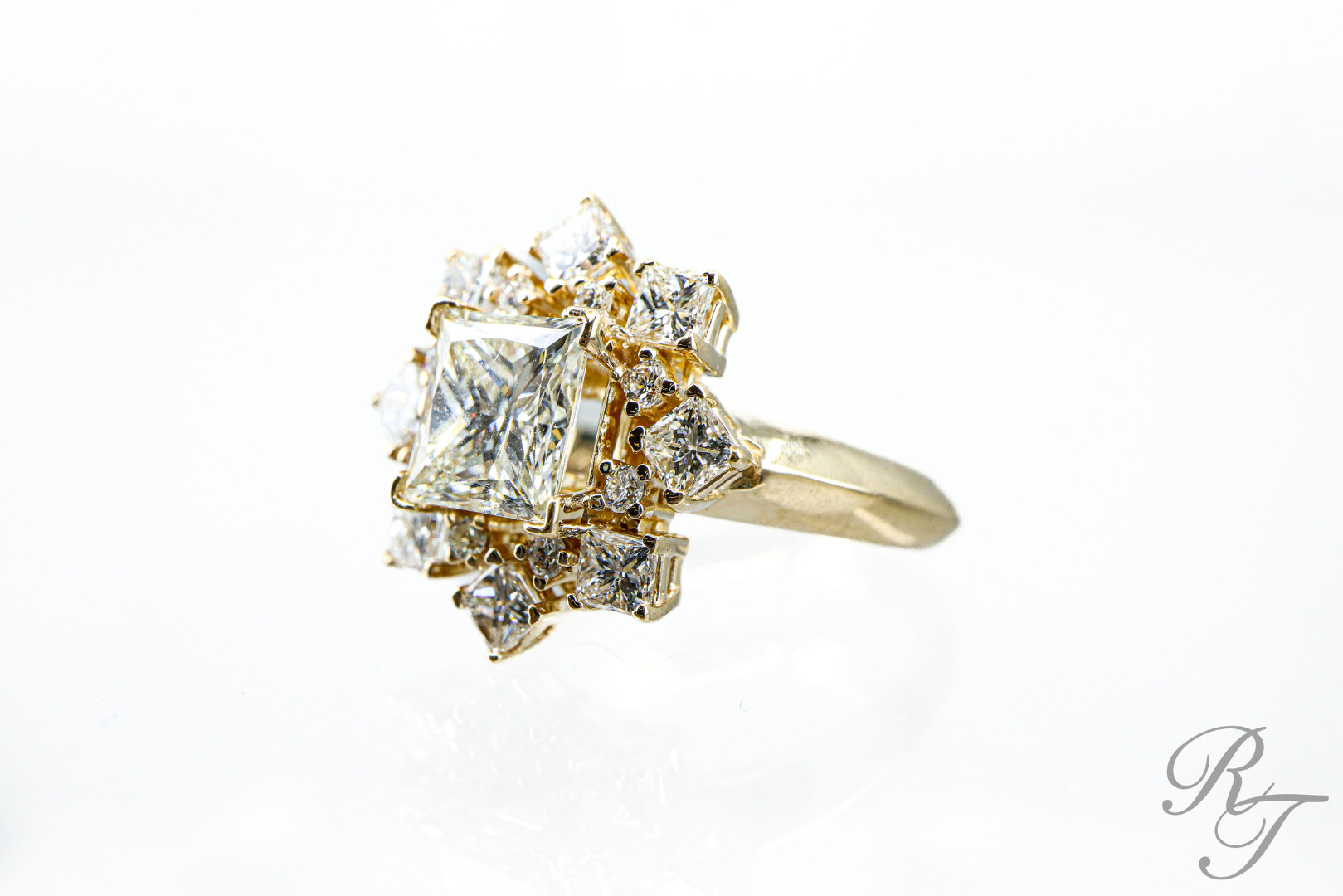
You know exactly how you want the moment to feel. The setting, the nerves, the look on their face. What you’re less sure about is the ring.
You want something that feels them, not pulled from a glass case alongside fifty identical options. You want something made for this person, this relationship, this moment. But every time you start researching custom engagement rings, you hit a wall of terminology, price ranges, and decisions you don’t know how to make.
Designing a custom engagement ring is far more approachable than most people expect. You don’t need design experience, gemological training, or an unlimited budget. What you need is a clear understanding of the process and a jeweler who will walk you through it.
You Need Direction!
The biggest misconception about the custom engagement ring design process is that you have to walk in knowing exactly what you want. You don’t.
Most people start with a feeling. A style. A few photos saved on their phone of rings their partner paused at a little too long. That’s enough to get started. Build a loose inspiration file using Pinterest boards, Instagram saves, or screenshots. You’re not looking for a final answer. You’re looking for patterns. Does she gravitate toward vintage details or clean modern lines? A delicate 1.5mm band or something with more visual weight? Gold or silver?
Your job is to bring the feeling. A skilled jeweler translates that into something buildable.
What Happens at a Custom Jewelry Consultation
Think of the consultation less like a sales appointment and more like a creative conversation. We will ask about your partner’s lifestyle, personal style, timeline, and budget, to design around them.
Come prepared with your inspiration images, a general budget range, your partner’s ring size if you know it, and any stones or heirloom pieces you want incorporated. You’ll leave with a clearer direction, a rough design concept, and a realistic picture of what your investment will look like.
In our experience at Rick Terry Jewelry Designs, clients who bring even three or four reference photos move through the design process faster and feel more confident in their final decision. The consultation is a low-pressure conversation. Understanding your vision comes first. Nothing else moves forward until that’s locked in.
The right choice comes down to your partner’s lifestyle, skin tone, and maintenance preferences. I’ve seen clients fall in love with white gold, then realize after a conversation about upkeep that platinum makes more sense for their life. That conversation is worth having before you commit.
Selecting Your Center Stone
This is the heart of the ring, and the options are broader than most buyers realize.
Natural diamonds remain the classic choice, graded by the Gemological Institute of America (GIA) on cut, color, clarity, and carat weight. Cut has the greatest impact on brilliance. A well-cut 1-carat diamond will outshine a poorly cut 1.5-carat stone every time. Lab-grown diamonds carry the same chemical and physical properties as natural diamonds and are available at 30 to 50 percent lower price points. Gemstones such as sapphires, emeralds, and morganite are increasingly chosen by couples who want something more personal and visually distinctive.
At Rick Terry Jewelry Designs, all diamonds and gemstones are locally and responsibly sourced. For many buyers today, knowing where a stone comes from matters. If that’s important to your partner, bring it up during the consultation. We can walk you through exactly where your stone originates.
The Setting, the Band, and Why They Matter More Than You Think
The setting is not just an aesthetic choice. It determines how secure the stone is, how the ring wears daily, and how well it holds up over decades of use.
A solitaire setting is timeless and puts full visual focus on the center stone. A halo setting surrounds the center stone with a border of smaller pavé-set diamonds, adding perceived size and brilliance without increasing the carat weight of the main stone. A bezel setting wraps the stone in a continuous metal rim, offering the most protection and a sleek, modern profile. It’s an excellent choice for someone with an active lifestyle or a hands-on job. Pavé and cathedral styles add detail and elegance but require more cleaning and maintenance over the years.
Your jeweler will help you match the setting style to your partner’s life, not just their aesthetic preferences. A ring should be beautiful and livable. Both matter.
See It Before It’s Built
Before fabrication begins, you’ll review the design through a CAD rendering or hand-drawn sketch. This step exists for one reason: changes are simple before a ring is made and expensive after.
Ask every question you have at this stage. If something doesn’t look right in the rendering, say so. This is the moment to get it perfect. Once fabrication begins, alterations to the design can add cost and time to the project.
The Best Place to Start Is a Conversation
Designing a custom engagement ring is a collaboration. The right jeweler brings expertise, trained eyes, and the kind of craftsmanship that turns a good idea into something extraordinary.
Ready to start? Book a consultation with Rick Terry Jewelry Designs in Knoxville, TN. Bring your inspiration, your questions, and your budget.
